Discover how we can help your team select better materials
Material sourcing and treatments often carry hidden social, environmental, and animal welfare risks. We help brands understand what they're using, and what it means.
Please resize your window or rotate your device.

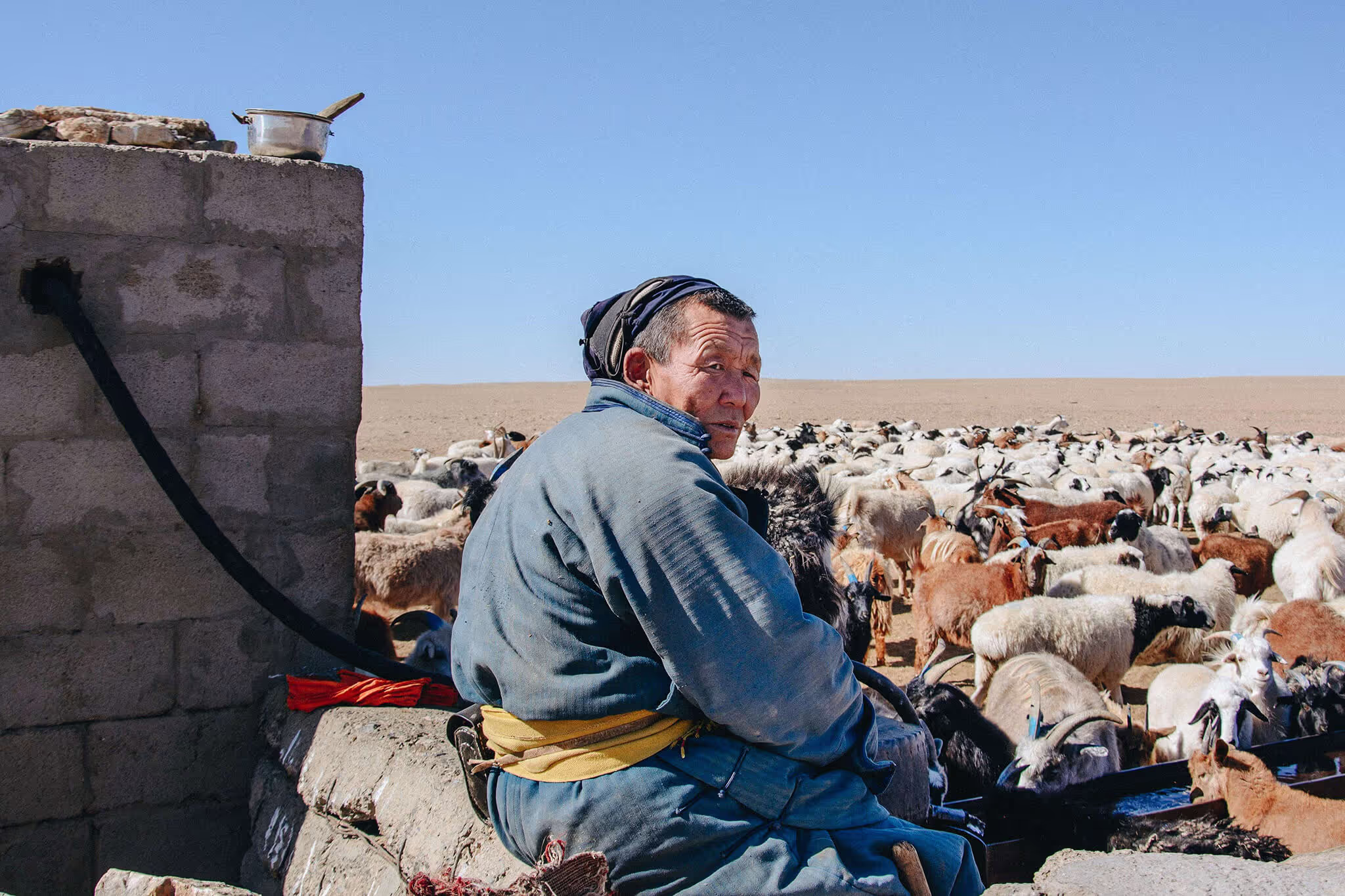
Cashmere comes from the soft undercoat of cashmere goats, known for its exceptional softness and warmth. The fibre is harvested by combing or shearing goats, primarily in regions such as Mongolia, China, Iran, and Afghanistan.
Cashmere goats are highly resilient animals, but their intensive grazing and hard hooves can contribute to land degradation and desertification, especially in fragile grassland areas, when not properly managed. Rising global demand has led to overstocking and increased pressure on ecosystems. Additionally, cashmere has a relatively low fibre yield per goat, making it a resource-intensive material.
While cashmere fibre is biodegradable and long-lasting, conventional supply chains often lack transparency. Ethical concerns remain regarding goat welfare and the livelihoods of herders, with limited visibility across many production lines.

For responsible cashmere sourcing, prioritise certified or traceable programmes that work directly with herder cooperatives, promote rotational grazing, and limit herd sizes to protect local ecosystems and animal welfare. Opt for recycled cashmere or high-quality cashmere blends to further reduce environmental impact, and be wary of ultra-cheap cashmere, which is more likely associated with irresponsible land use and poor welfare standards.
If your team needs support sourcing, talk to us to find out how we can help.


Material sourcing and treatments often carry hidden social, environmental, and animal welfare risks. We help brands understand what they're using, and what it means.

Materials and treatments are at the heart of every product. Bergstrand helps brands navigate these choices through clear guidance, structured tools, and practical workshops that embed sustainability into design and development.
Discover more →Our team know that it isn’t just about choosing materials that tick boxes, it’s also selecting materials that feel, behave and look the way they should.
With our core focus on fashion, performance and textiles, we offer advice in a way that doesn’t compromise on your product.
Find out more about what we can do for your brand.
Thank you for your enquiry.
A member of our team will get back to you within 24 hours.
If you’re curious to see how we’ve helped our other clients, feel free to browse our Case Studies.