Discover how we can help your team select better materials
Material sourcing and treatments often carry hidden social, environmental, and animal welfare risks. We help brands understand what they're using, and what it means.
Please resize your window or rotate your device.

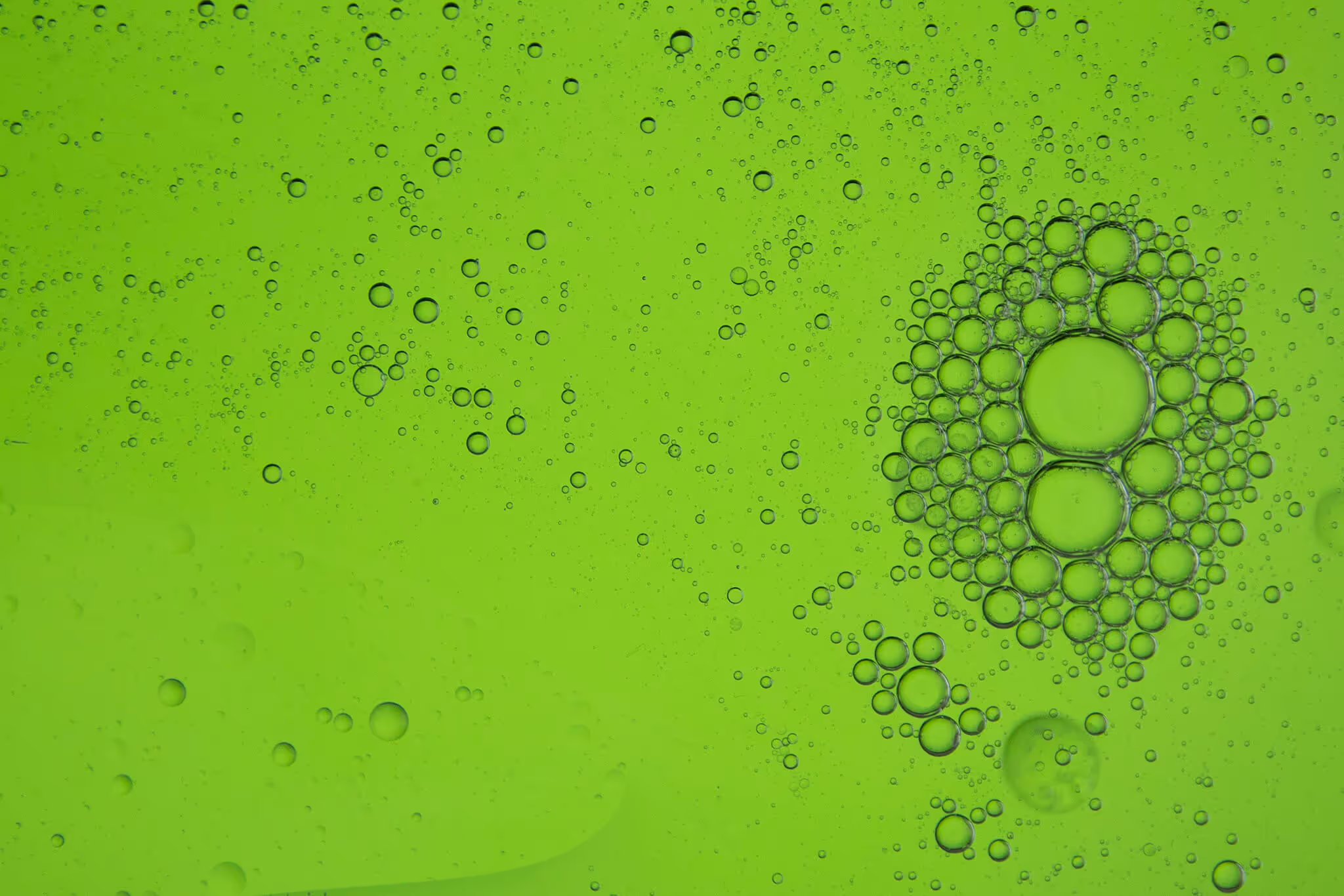
Bio-synthetics are man-made fibres made wholly or partially from renewable crops such as corn, sugarcane, or wheat. While they are often marketed as greener alternatives to conventional synthetics, their overall environmental impact depends heavily on factors like the type of feedstock, energy sources used during production, and their end-of-life behaviour.
Most bio-synthetics undergo chemical processing, and many, such as bio-based PET, are chemically identical to fossil-based versions, meaning they are non-biodegradable and shed microplastics similarly. Others, like PLA, are compostable but only under industrial composting conditions.
Sustainability benefits can also be reduced if feedstocks are genetically modified (GMO), require intensive agriculture, or compete with food production.

For better sourcing practices, we recommend prioritising natural and regenerated fibres such as organic cotton, linen, and TENCEL™ Lyocell, which generally offer lower environmental impacts and better biodegradability compared to bio-synthetics.
If your team needs support sourcing, talk to us to find out how we can help.

Material sourcing and treatments often carry hidden social, environmental, and animal welfare risks. We help brands understand what they're using, and what it means.

Materials and treatments are at the heart of every product. Bergstrand helps brands navigate these choices through clear guidance, structured tools, and practical workshops that embed sustainability into design and development.
Discover more →Our team know that it isn’t just about choosing materials that tick boxes, it’s also selecting materials that feel, behave and look the way they should.
With our core focus on fashion, performance and textiles, we offer advice in a way that doesn’t compromise on your product.
Find out more about what we can do for your brand.
Thank you for your enquiry.
A member of our team will get back to you within 24 hours.
If you’re curious to see how we’ve helped our other clients, feel free to browse our Case Studies.