Discover how we can help your team select better materials
Material sourcing and treatments often carry hidden social, environmental, and animal welfare risks. We help brands understand what they're using, and what it means.
Please resize your window or rotate your device.


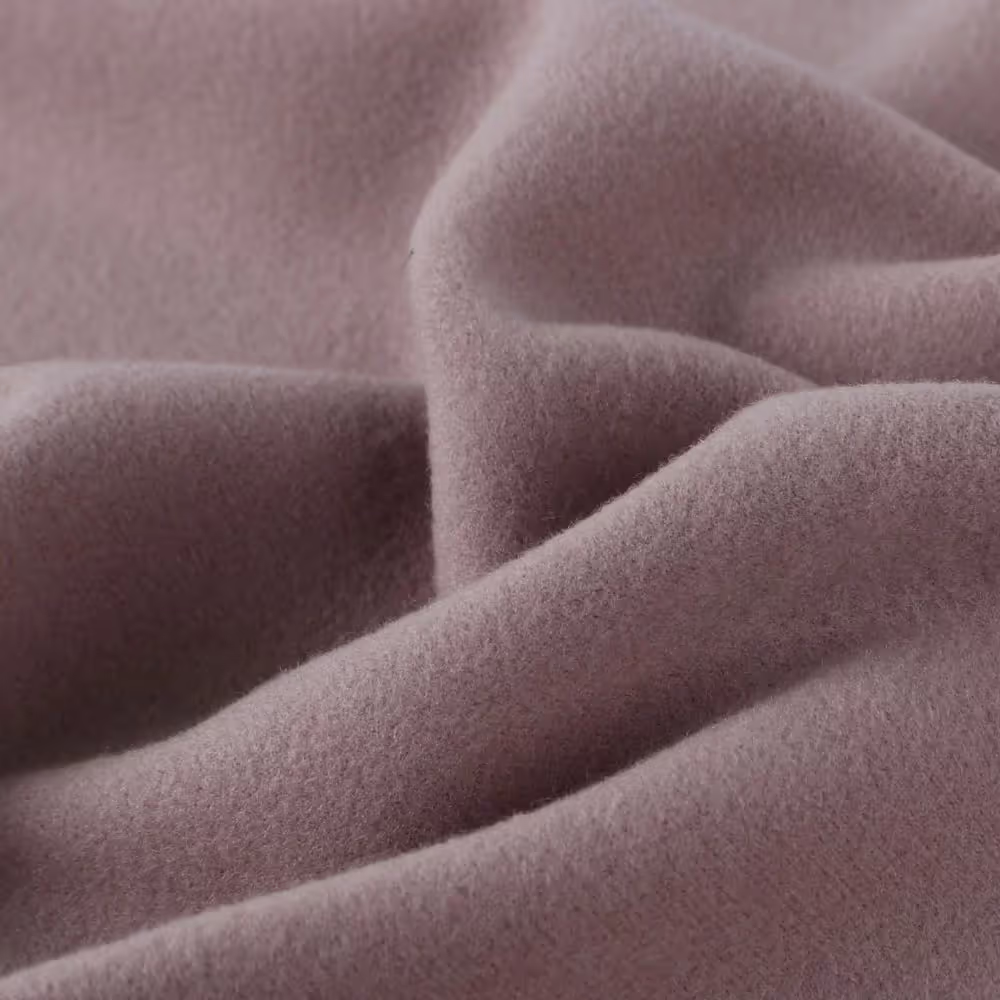
Acrylic is a synthetic fibre made from polyacrylonitrile, a petroleum-based polymer. It’s spun into yarns used in sweaters, scarves, socks, and blankets, sometimes blended with wool to enhance softness and affordability. However, its production involves toxic chemicals such as acrylonitrile, which is classified as a carcinogen and poses health risks to workers and potentially to consumers.
Acrylic is non-biodegradable and sheds microplastic fibres during wear and washing, contributing to persistent environmental pollution. Its limited recyclability and the toxicity associated with its manufacture make acrylic a less responsible fibre choice.

We encourage brands to prioritise natural fibres such as organic cotton and regenerative wool, which are renewable, biodegradable, and have lower environmental impacts compared to acrylic.
If your team needs support sourcing, talk to us to find out how we can help.

Material sourcing and treatments often carry hidden social, environmental, and animal welfare risks. We help brands understand what they're using, and what it means.

Materials and treatments are at the heart of every product. Bergstrand helps brands navigate these choices through clear guidance, structured tools, and practical workshops that embed sustainability into design and development.
Discover more →Our team know that it isn’t just about choosing materials that tick boxes, it’s also selecting materials that feel, behave and look the way they should.
With our core focus on fashion, performance and textiles, we offer advice in a way that doesn’t compromise on your product.
Find out more about what we can do for your brand.
Thank you for your enquiry.
A member of our team will get back to you within 24 hours.
If you’re curious to see how we’ve helped our other clients, feel free to browse our Case Studies.