Please resize your window or rotate your device.

Please resize your window or rotate your device.

Footwear can involve specific materials and components that introduce added complexity, such as leather traceability, fluorinated chemicals in synthetic rubber soles, and safety risks linked to heel construction.
Without a Code of Conduct in place, the client lacked a common standard across their suppliers and was unsure how to address fast-evolving regulations like the EU Deforestation Regulation or General Product Safety Regulation (GPSR).
We developed a custom Code of Conduct grounded in global standards, but tailored to the realities of footwear.
This included detailed clauses on leather sourcing, a section on unnecessary surface treatments, and specific language around synthetic rubber and chemical use.
We also addressed the General Product Safety Regulation by flagging the need for product testing and documentation, helping the client understand how to manage supplier conversations even when internal expertise was still evolving.
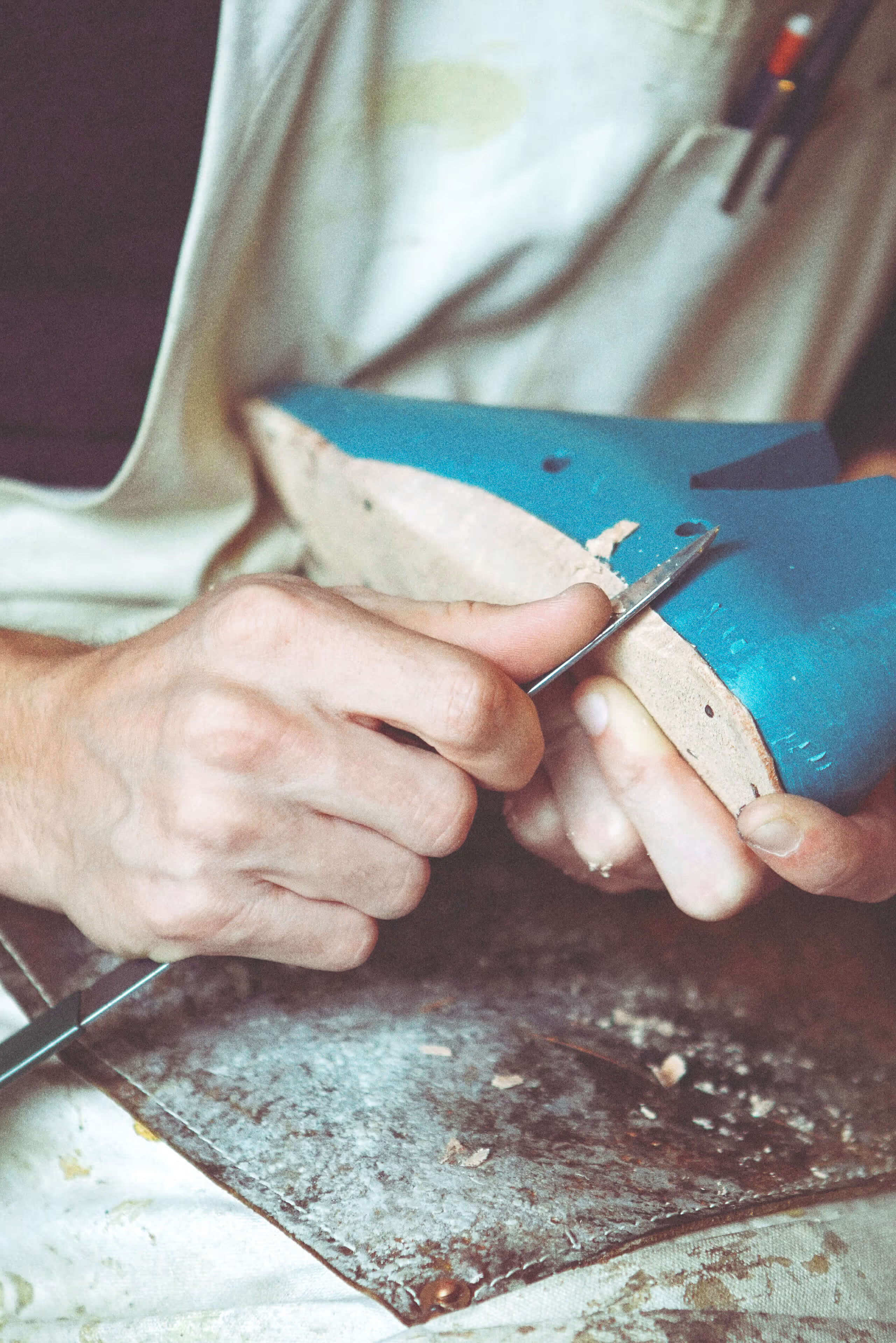
When brands scale quickly, supplier oversight can slip. A clear, binding Code of Conduct creates alignment, making expectations explicit and helping brands shift to proactive risk management.
Footwear presents risks that don’t always apply to apparel, from heel safety to regulated rubber compounds. Our Code of Conduct reflected these nuances, giving the client more confidence in the safety, traceability, and compliance of their products.
The final Code of Conduct equipped the client to have more informed conversations with suppliers, even around topics they were still learning about themselves.

The brand now has a legally binding Code of Conduct that reflects its product category and growth ambitions.
It helps safeguard against compliance risks, strengthens supplier relationships, and lays the groundwork for better product safety practices, all while reinforcing their commitment to responsible sourcing.
Footwear isn’t apparel, and a Code of Conduct shouldn’t be one-size-fits-all.
At Bergstrand, we help brands translate their product-specific risks into credible, tailored tools that suppliers can understand and act on.


Our methods have been tried and tested with some of the world’s most respected brands.
Contact us to find out how we can help you.
Thank you for your enquiry.
A member of our team will get back to you within 24 hours.
If you’re curious to see how we’ve helped our other clients, feel free to browse our Case Studies.