Discover how we can help your team select better materials
Material sourcing and treatments often carry hidden social, environmental, and animal welfare risks. We help brands understand what they're using, and what it means.
Please resize your window or rotate your device.

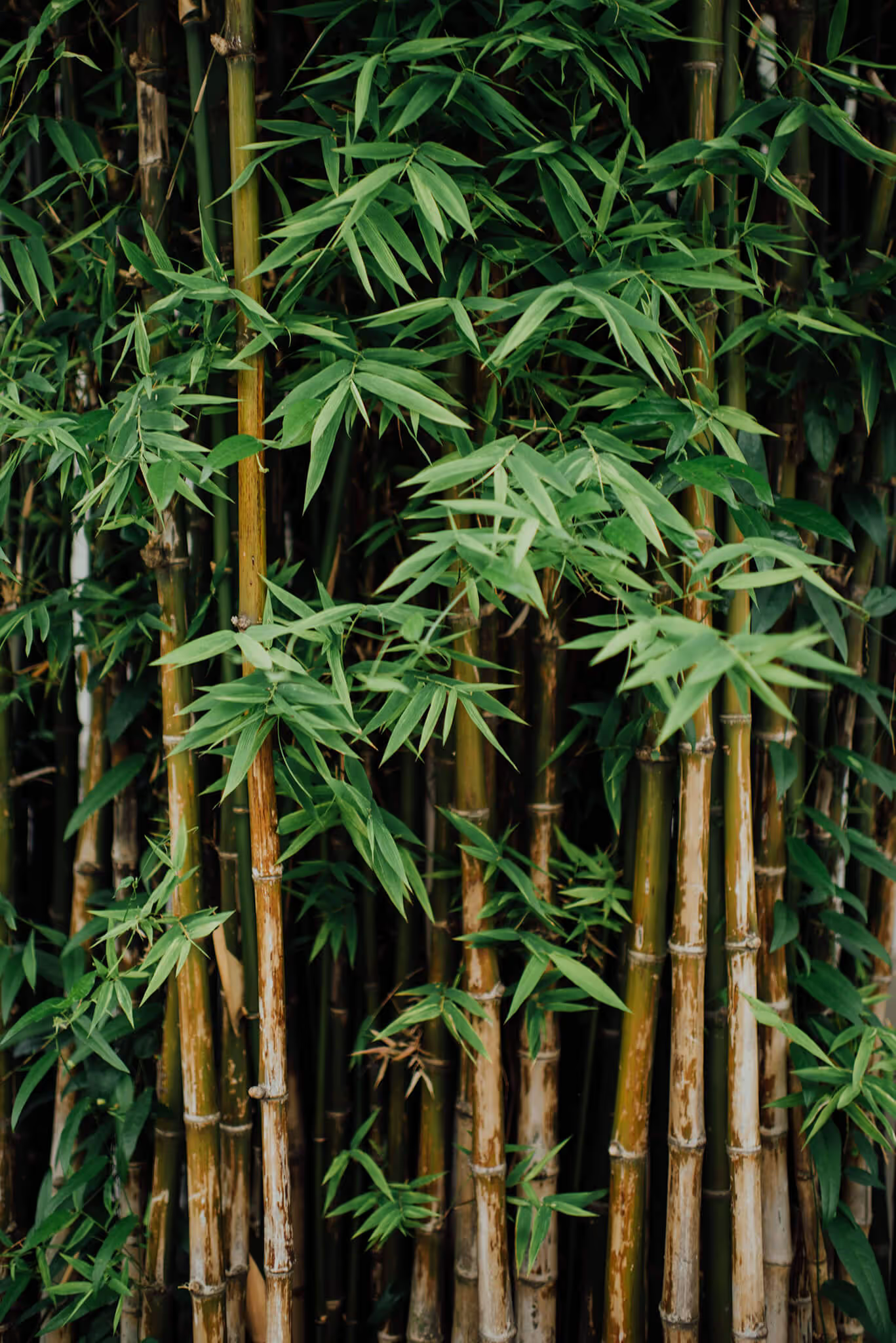
Bamboo grows quickly with little need for water or pesticides, making it an attractive raw material. However, its environmental impact depends heavily on the processing method.
Bamboo linen (mechanically processed) is a rare but low-impact option. Bamboo lyocell is a promising middle ground made in closed-loop systems. Meanwhile, bamboo viscose (also called bamboo rayon) involves intensive chemical use and raises risks for both the environment and worker health.

We recommend choosing bamboo fabrics with lower environmental impact, favouring mechanically processed bamboo linen and closed-loop bamboo lyocell over bamboo rayon. We also advise sourcing from suppliers who ensure safe chemical handling and good transparency about their processes.
If your team needs support sourcing, talk to us to find out how we can help.

Material sourcing and treatments often carry hidden social, environmental, and animal welfare risks. We help brands understand what they're using, and what it means.

Materials and treatments are at the heart of every product. Bergstrand helps brands navigate these choices through clear guidance, structured tools, and practical workshops that embed sustainability into design and development.
Discover more →Our team know that it isn’t just about choosing materials that tick boxes, it’s also selecting materials that feel, behave and look the way they should.
With our core focus on fashion, performance and textiles, we offer advice in a way that doesn’t compromise on your product.
Find out more about what we can do for your brand.
Thank you for your enquiry.
A member of our team will get back to you within 24 hours.
If you’re curious to see how we’ve helped our other clients, feel free to browse our Case Studies.